
Ad-Free YouTube: What Android Users Really Do
YouTube without ads It's become a target for millions of Android users tired of invasive ads. However, ad-free YouTube isn't a one-size-fits-all experience: some pay, some circumvent the rules, and some put up with it all.
Videos cut off at crucial moments, ads for products we'll never buy, increasingly longer formats: it's the price we pay for accessing the world's largest video platform. But how many people actually accept this trade-off, and how many have changed their behavior to eliminate it?
A recent survey by Android Authority provides a precise snapshot of how Android users watch YouTube today, including Premium subscriptions, third-party apps, browsers with ad-blockers, and a surprisingly resilient minority who continue to use the official app with all its ads enabled.
Ad-Free YouTube: Android Authority Survey Numbers
To understand how to get YouTube without ads, Android Authority's survey analyzed real user habits. The results reveal a fragmented ecosystem, where there's no single dominant solution, but rather several parallel strategies.
According to the survey, 31% of Android users choose to pay for a YouTube Premium subscription. 26% instead use third-party, often unofficial, apps to remove ads without recurring costs. A further 16% watch videos on browsers with ad blockers, while nearly one in five users still accept ads using the official app.
Completing the picture are 5%, who says he doesn't watch YouTube on his smartphone, and 4%, who uses alternative methods not covered by the survey options. This cross-section clearly illustrates how central advertising has become to the platform's user experience.
To gain a deeper understanding of YouTube as a global platform, it is also useful to look at the official data available, for example, on Wikipedia or to analyses on the digital advertising market published by companies such as Statesman.
YouTube without ads with Premium: the 31% chooses to pay
The simplest and most official way to get YouTube without ads It's YouTube Premium. 31% of the users involved in the survey decided to sign up for a subscription, agreeing to pay to completely eliminate ads.
The perceived value lies primarily in its convenience: no configuration, no risk of crashes, the same experience across smartphones, tablets, TVs, and browsers. A single solution that works everywhere, reliably, and is directly supported by Google.
In an era dominated by the idea that "everything should be free," it's no surprise that nearly one in three people choose to pay. Several factors contribute to this choice: the intensive use of YouTube as an entertainment and educational platform, the desire to support creators, and the perception that, if you spend hours a day on the platform, a monthly fee (currently around €13.99) is comparable to everyday expenses like coffee or small recurring purchases.
Also interesting is the case of those who discover they have Premium “by accident”: some users subscribed to YouTube Music only later realized that their plan also automatically removes ads from videos, transforming the experience into an almost completely ad-free YouTube.
Third-party apps: The 26% goes the unofficial route
Right behind YouTube Premium, with the 26% of preferences, there are third-party apps for Android, which promise YouTube without ads No subscription fees. It's a choice that requires a minimum of technical expertise and a willingness to accept a legal gray area.
Among the most popular solutions is ReVanced, considered the spiritual successor to YouTube Vanced, which was shut down after legal pressure from Google. These apps replicate YouTube's interface, often offering all the main features and integrating additional tools like SponsorBlock, which allows you to automatically bypass in-video sponsorships.
For those who don't want to pay, the promise is clear: the same experience as the official platform, but without pre-roll, mid-roll, or banner ads. The downside is the lack of continuity guarantees: Google can intervene technically or legally at any time, interrupting the functionality of these solutions.
Furthermore, since these apps aren't distributed through official channels like the Google Play Store, they require users to manually install APK packages, with all the potential risks associated with security, updates, and reliability. For marketers and brands, this means having a segment of their audience that's difficult to reach through traditional advertising on YouTube.
Browsers with ad-blockers: the 16% remains “old school”
Another 16% of Android users choose a third way to get YouTube without adsWatch videos via a browser with an ad blocker and advanced controls. This approach predates the explosion of the official YouTube mobile app, but it still has a loyal following.
The most commonly cited combination is Firefox for Android along with extensions like uBlock Origin and SponsorBlock. Firefox, unlike Chrome for mobile, allows the installation of extensions similar to desktop extensions, giving users much more granular control over their viewing experience.
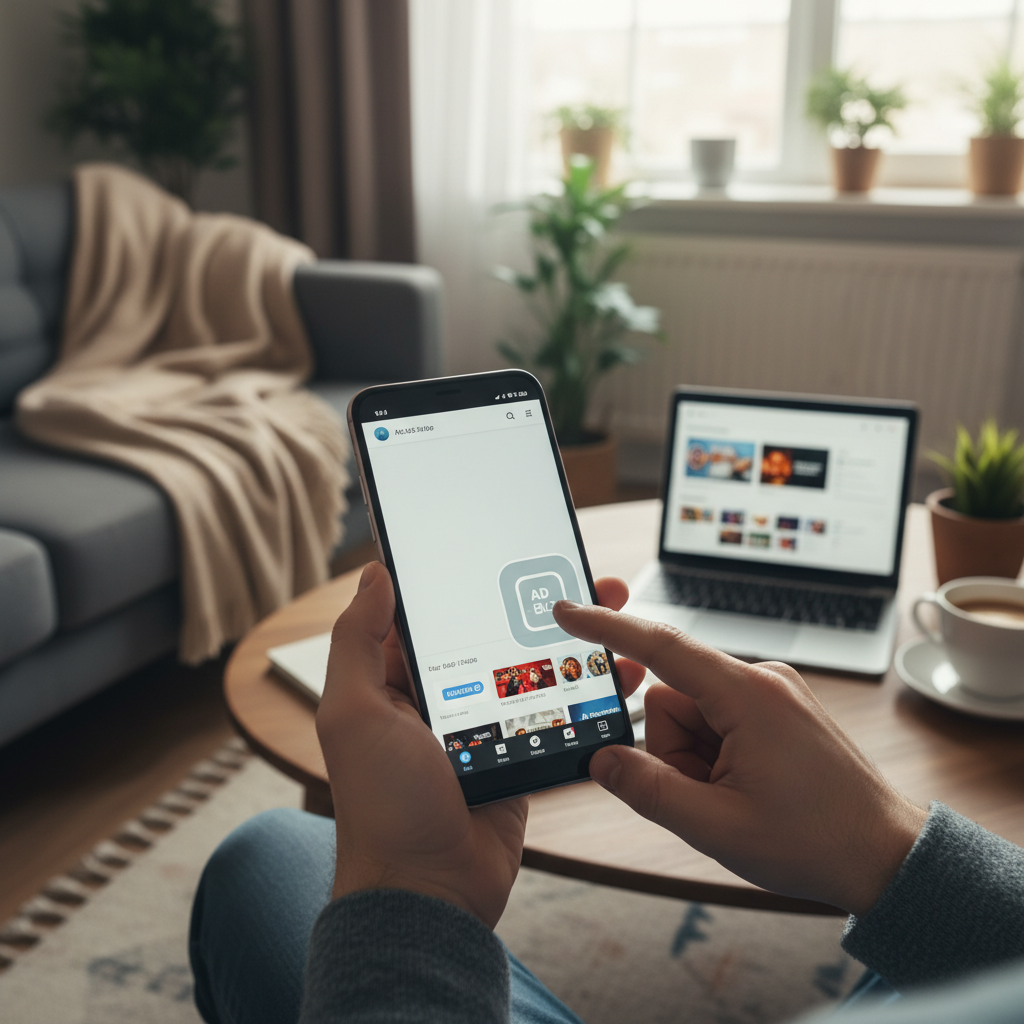
In this context, you can block ads, skip sponsored content, change the playback speed, force background playback, and even customize the interface. The downside is a less mobile-friendly UX than the native app: smaller buttons, less intuitive gestures, and less deep integration with the operating system.
Still, for those who want to avoid subscriptions and don't trust unofficial apps, this solution represents a good compromise between security, control, and an experience very close to YouTube without ads.
Who still tolerates ads and who abandons their smartphones
Nearly one in five survey participants said they use the official YouTube app on Android and accept ads. This is a significant percentage, considering the number of alternatives available for getting YouTube without ads.
This shows that the annoyance generated by ads alone isn't always enough to change digital habits. Some people prefer not to install unofficial apps, others don't want to change their setup, others fear violating the terms of service, or simply find the ad interruptions tolerable.
Alongside this group, a 5% member declared they don't watch YouTube at all on their smartphones: they are either "desktop devotees," or users who have drastically reduced their video consumption on the platform. Finally, a 4% member selected "other," indicating hybrid solutions such as VPNs to subscribe in other countries at lower prices, special smart TV configurations, or content streams from alternative platforms.
For brands and marketers, this data is invaluable: it shows that the reach of ads on YouTube depends heavily on the targeted audience segment and its technology choices.
Ad-Free YouTube: Impact on Marketing and Business
The diffusion of solutions for YouTube without ads It has a direct impact on digital marketing and advertising-based business models. Every user who blocks ads, upgrades to Premium, or switches platforms reduces the reach potential of campaigns based solely on pre-roll or mid-roll video ads.
Companies that rely exclusively on traditional advertising on YouTube risk missing out on a growing share of ad-free users. This makes it strategic to diversify: organic content, communities, direct channels like email, and, above all, messaging apps like WhatsApp, where the brand-user relationship is more manageable and less susceptible to ad blocks.
From a customer experience perspective, the expectation of a frictionless experience is extending to all touchpoints. While users search for YouTube ad-free, they also expect quick, personalized, and unobtrusive interactions with brands. This is where automation and the intelligent use of conversational channels come into play, replacing the passive interruption of advertising with active, valuable dialogue.
For performance-oriented businesses, this means rethinking the funnel: using YouTube as a discovery channel (organic or through targeted campaigns), but then moving the relationship to proprietary and controllable channels, where the company isn't dependent on algorithms or ad blockers.
How SendApp Can Help with Ad-Free YouTube
The emergence of behaviors oriented towards YouTube without ads This raises a challenge: how can you continue to reach and engage your audience when ad visibility declines? The answer lies in building direct channels, and WhatsApp Business is currently one of the most effective tools for this.
With SendApp Official, companies can integrate the Official WhatsApp Business APIs into their systems, creating automated conversational flows that transform the attention gained (including from YouTube) into lasting relationships. Instead of interrupting videos with ads, brands can invite users to subscribe to a WhatsApp list to receive exclusive content, personalized offers, and immediate support.
To best manage the volume of requests and conversations generated by multi-channel campaigns, SendApp Agent It allows you to distribute chats among multiple operators, create teams, and measure performance. This allows you to manage the channel in a structured way, turning users who avoid YouTube advertising into qualified leads within a conversational environment.
In the end, SendApp Cloud enable advanced scenarios marketing automation On WhatsApp: segmentation, scheduled messages, and triggers based on user actions (such as watching a video or clicking a call to action). This way, the strategy doesn't just chase users with ads, but builds an ecosystem where YouTube is just the starting point of a broader journey.
As more and more people seek ad-free YouTube-like experiences, integrating WhatsApp Business and automation with SendApp becomes a strategic choice to maintain high levels of engagement and protect your ability to communicate, regardless of ad blockers and platform policy changes.
For companies looking to rethink their channel mix, the next step is clear: evaluate how to shift some of their budget and focus from video advertising alone to a more balanced combination of content, automation, and direct conversations. SendApp offers consulting and tools to do this quickly and measurably, starting with optimizing the WhatsApp Business channel.