
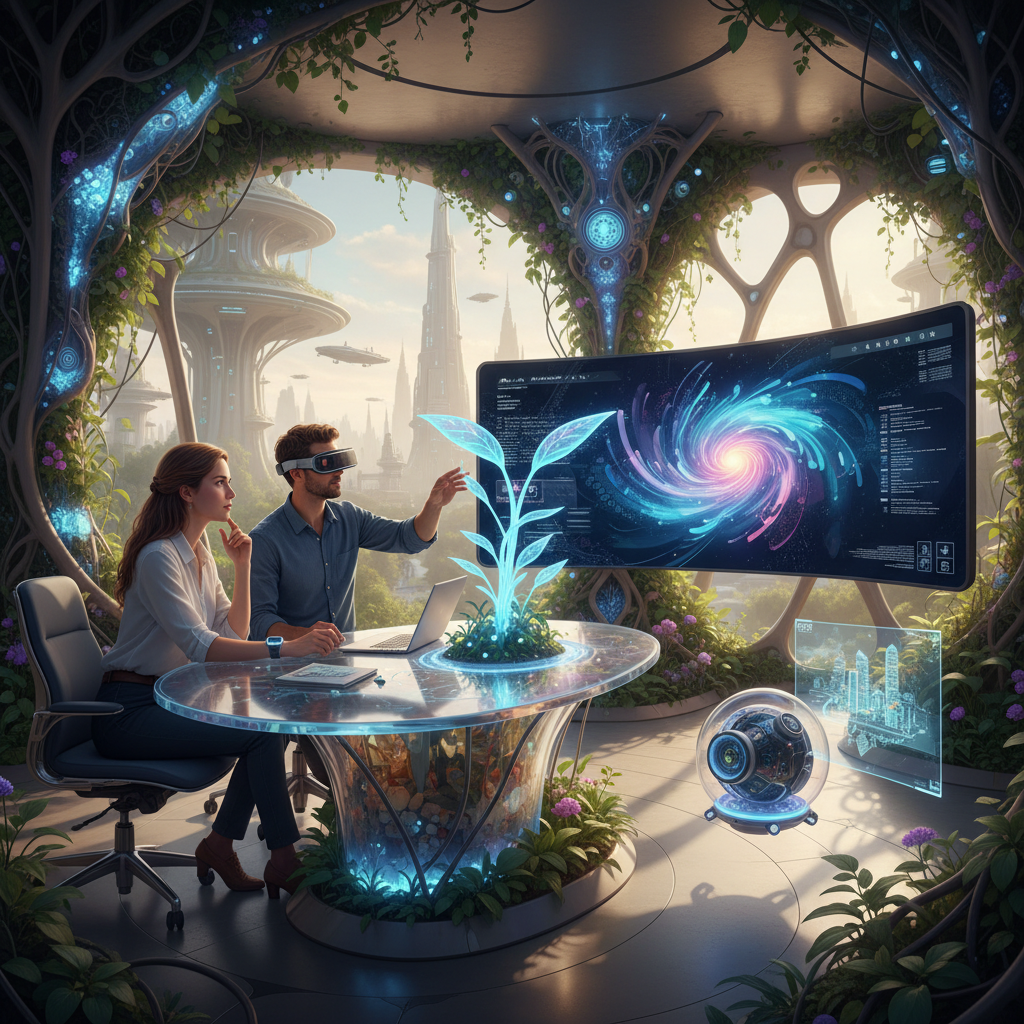
Artificial Intelligence and Human Creativity: The Challenges After CES 2026
Artificial intelligence and human creativity are now at the center of technological and business debate. The evolution of artificial intelligence, also showcased at CES 2026 in Las Vegas, raises a crucial question: can it truly surpass human creativity, or will it enhance it without replacing it?
CES 2026 has confirmed its position as the most important global showcase for observing how AI is permeating every industry: from consumer electronics to marketing, from smart mobility to digital healthcare. Companies are no longer simply showcasing hi-tech products, but actual ecosystems based on machine learning models and advanced automation.
In this scenario, understanding the relationship between artificial intelligence and human creativity It becomes essential for marketers, entrepreneurs, and professionals who want to use AI as a competitive lever, without losing the unique value of human ingenuity.
Artificial Intelligence and Human Creativity at CES 2026 in Las Vegas
CES 2026, the historic Las Vegas fair dedicated to emerging technologies, has highlighted solutions for artificial intelligence increasingly autonomous and generative. From multimedia content generation to product design, the AI demonstrated at the fair is capable of analyzing massive datasets and proposing creative variations in seconds.
Major hi-tech companies presented platforms capable of creating videos, images, and music from simple text prompts, leveraging advanced neural networks such as generative models and transformer architectures. Other exhibitors presented AI systems integrated into IoT devices, connected cars, and smart homes, capable of learning from user habits to offer increasingly personalized experiences.
At the same time, numerous panels and conferences addressed the issue of the relationship between artificial intelligence and human creativity, with researchers, artists, and managers discussing opportunities, ethical risks, and the impact on creative work. The key question remained: is AI truly creative, or is it simply processing what it learns from data?
To gain a deeper understanding of CES and its role in global technological innovation, it is also useful to consult the official information on the Consumer Technology Association website and the market analyses published periodically by authoritative sources such as the Wikipedia entry dedicated to CES.
How AI Creativity Compares to Human Creativity
To truly understand the relationship between artificial intelligence and human creativity, It's important to start with how current AI systems work. Machine learning and deep learning algorithms learn from large amounts of data: text, images, audio, code. Based on this data, they generate new combinations that appear original, but actually derive from learned statistical patterns.
Human creativity, on the other hand, integrates logic, emotion, cultural context, personal experience, and intuition. Humans don't simply combine existing information; they can break patterns and create previously unseen concepts, guided by conscious intentions, values, and goals. Furthermore, humans are capable of attributing meaning and interpreting their creations within an ethical and social framework.
Many researchers point out that the systems of artificial intelligence Today, they lack consciousness, intentionality, or deep understanding. They generate content that appears creative, but lacks a real experience of the world. For this reason, several studies—such as those collected by’scientific encyclopedia on artificial intelligence – they speak of “simulated” or “assisted” creativity rather than autonomous creativity.
In practice, true value arises when artificial intelligence and human creativity They work together: AI accelerates the exploration, drafting, and experimentation phases, while humans select, interpret, refine, and strategically direct ideas.
Practical applications of artificial intelligence and human creativity in digital content
In the world of digital marketing, the relationship between artificial intelligence and human creativity It's already a daily reality. Companies use generative AI tools to quickly produce copy, visuals, and videos, reducing production time and costs. These solutions allow them to create ad variations, landing pages, and social content optimized for different audience segments.
For example, a creative team can use AI to generate 20 headline ideas, select three, tweak them, and test them with A/B campaigns. This way, human creativity remains at the center, while AI takes care of the "volume" and optimization work. The result is a faster workflow and more accurate data for marketing decisions.
Even in product design and UX, the’artificial intelligence It helps simulate scenarios, generate alternative layouts, and predict user behavior. However, final decisions on brand identity, tone of voice, and creative direction typically remain in the hands of designers, marketers, and product managers, who interpret AI insights in light of business objectives and corporate values.
Organizations like the’OECD They are also studying the impact of AI on work and skills, highlighting how the integration between artificial intelligence and human creativity requires continuous training, new digital skills, and clear ethical governance.
Artificial Intelligence and Human Creativity: Impact on Marketing and Business
The relationship between artificial intelligence and human creativity It has a direct impact on marketing strategies and the way companies communicate with customers. AI allows for fine-grained audience segmentation, personalized messages, large-scale communication workflow automation, and precise measurement of campaign performance.
For brands, this means being able to create more relevant and timely content while maintaining strong human creative direction. Marketers can use AI to generate storytelling proposals, visual concepts, and copy variations, but it's then people who choose which ideas truly represent the brand's identity and transform them into coherent experiences throughout the customer journey.
In customer care, the’artificial intelligence It allows you to automate first-level responses and manage high volumes of requests via chatbots and messaging systems. However, at key moments in the relationship—complaint management, upselling, and loyalty—human creativity in dialogue, empathy, and the ability to adapt to the context remain crucial to building trust and long-term value.
For businesses that work with conversational channels like WhatsApp Business, integrate artificial intelligence and human creativity It means designing communication funnels where AI manages automation and human operators intervene with personalized messages, tailored commercial proposals, and creative content that strengthen customer relationships.
How SendApp Can Help with Artificial Intelligence and Human Creativity
SendApp was created precisely to allow companies to make the most of the combination between artificial intelligence and human creativity on messaging channels like WhatsApp Business. The platform offers tools to automate communication flows, integrate external systems, and efficiently manage teams of agents, freeing up the creativity of marketers and salespeople.
With SendApp Official, businesses can use WhatsApp's official APIs to connect CRM, e-commerce, and marketing automation systems. This allows them to orchestrate campaigns based on artificial intelligence – such as advanced segmentation and dynamic messaging – while maintaining human control over the brand’s strategy, key content, and tone of voice.
SendApp Agent It allows you to manage teams of operators who work in synergy with bots and automations. Bots handle repetitive requests and initial information, while human agents intervene in the most value-added steps, bringing their creativity, empathy, and problem-solving skills to the conversation. Thus, artificial intelligence and human creativity they integrate into a single flow.
For companies that want to take automation to the next level, SendApp Cloud It offers a scalable infrastructure to handle large message volumes, complex scenarios, and integrations with other digital tools. Marketers can design automated flows to always leave room for human intervention to add creative value, such as with personalized campaigns, brand storytelling, and tailored commercial proposals.
In this ecosystem, platforms like SendApp become the connecting link between artificial intelligence and human creativity, helping companies transform instant messaging into a true conversational marketing channel and advanced customer experience.
If your company wants to bring the best of CES 2026 into its digital strategy, the next step is to design communication flows where AI and people collaborate harmoniously. Request a consultation on WhatsApp Business and discover how to use SendApp to integrate artificial intelligence and human creativity in your campaigns, or test the platform immediately with a trial dedicated to your use cases.