
Why 2026 is the year of AI's "operational maturity"
In recent years, Artificial Intelligence has gone from a futuristic promise to an everyday tool. In 2026, however, the real difference won't be made by "the most powerful model," but by companies' ability to integrate AI into their processes in a stable, measurable, and manageable way. In short: fewer demos, more results.
This phase shift is particularly evident in the world WhatsApp Business. Many Italian companies have experimented with chatbots, automatic responses, and mass mailings, but often with disconnected initiatives: a PoC for customer support, a marketing campaign, a cart recovery flow. In 2026, the focus will be on transforming these attempts into a end-to-end system that unites marketing, sales, and customer care, with clear metrics and a reliable infrastructure.
In this article we look at the most relevant AI trends for 2026 for businesses, with a practical approach marketing automation, Conversational AI is WhatsApp Business API, and with concrete examples from the Italian market.
The technological plateau: from frenzy to planning
When technology is too fast, planning becomes difficult: models, tools, costs, and best practices change. 2026, however, promises to be a year of greater stability: this doesn't mean that innovation is slowing down, but rather that it's becoming more "industrializable.".
For companies, this is a huge advantage: they can finally plan AI adoption with an annual (or multi-year) horizon, defining budgets, governance, and KPIs. On WhatsApp Business, this stability translates into a specific question: How to transform a chatbot or automation workflow into a scalable and profitable asset?
What's new for those working with WhatsApp Business?
- We move from evidence to trial: it's not enough to "respond faster", you need to build a coherent customer journey.
- The impact is measured: conversion rate, ticket reduction, AHT (average handling time), CSAT, incremental revenue.
- Risk is managed: data policy, privacy, tone of voice, escalation to human operators, response auditing.
From the single model to the systemic vision: the process is the unit of measurement
Until recently, many companies adopted siloed tools: one tool for text, one for audio, one for video, and a separate chatbot for support. In 2026, the winning approach is systemic: the unit of measurement is not the model, but the end-to-end process.
On WhatsApp this means designing a unique flow that can include:
- contact acquisition (opt-in) and profiling;
- transactional messages (order, shipping, appointments);
- segmented marketing campaigns;
- automated assistance with AI;
- seamless handover to an operator when needed;
- reporting and continuous improvement.
The difference between “having a chatbot” and “having an AI system on WhatsApp” lies entirely here: continuity, data, and control.
AI Trends 2026 #1: Conversational AI is Results-Oriented (Not Answer-Oriented)
In 2026, conversational AI stops being an exercise in style (“look how well he speaks”) and becomes a performance tool: it must complete tasks and not just answer questions.
In the WhatsApp Business environment, the most requested tasks are:
- qualify leads and assign them to the right salesperson;
- reduce repetitive tickets (timetables, returns, order status);
- guide the user in choosing the product;
- book appointments and manage changes/cancellations;
- recover carts and reactivate dormant customers.
Practical example (Italy): furniture showroom
A company with a showroom in Lombardy receives dozens of requests a day on WhatsApp: availability, measurements, delivery times, quotes. In 2026, the "mature" flow isn't a simple FAQ bot, but an assistant that:
- asks for budget, style, square footage and timing;
- offers a selection of categories (kitchens, sofas, wardrobes);
- collects photos/inspirations sent by the customer;
- book a showroom visit or a video call;
- Pass the contact to the consultant with a structured summary.
Result: less waste, more qualified appointments and an experience perceived as “premium”.
AI Trends 2026 #2: WhatsApp Automations Are Getting More Personalized (Without Becoming Intrusive)
Marketing automation on WhatsApp can't be a copy of old email marketing. In 2026, those who work on it will win. useful customization: short, contextual messages, based on behavior and preferences, with sustainable frequency.
The most effective companies will use segmentations such as:
- new leads vs. returning customers;
- interest by category (e.g. running, skincare, auto parts);
- location (for in-store events or in-store availability);
- order status and purchase history;
- engagement (who responds, who ignores, who asks for assistance).
Practical example (Italy): beauty e-commerce
A cosmetics e-commerce site can set up automations on WhatsApp for:
- post-purchase: instructions for use + routine advice after 3 days;
- buyback: “time to reorder” reminder after 25-40 days, depending on the product;
- cross-selling: suggestion of a complementary serum only to those who have purchased a specific cream;
- assistance: if the customer responds “irritated”, the AI suggests alternatives and, if necessary, escalates the issue to an operator.
This approach reduces returns, increases LTV, and improves relationships because every message has a clear purpose.
AI Trends 2026 #3: Governance, Compliance, and Conversational Quality as a Competitive Advantage
When AI enters core processes (sales, support, payments, sensitive data), the question isn't just "does it work?", but "can we trust it?" By 2026, established companies will introduce rules and controls as part of the project.
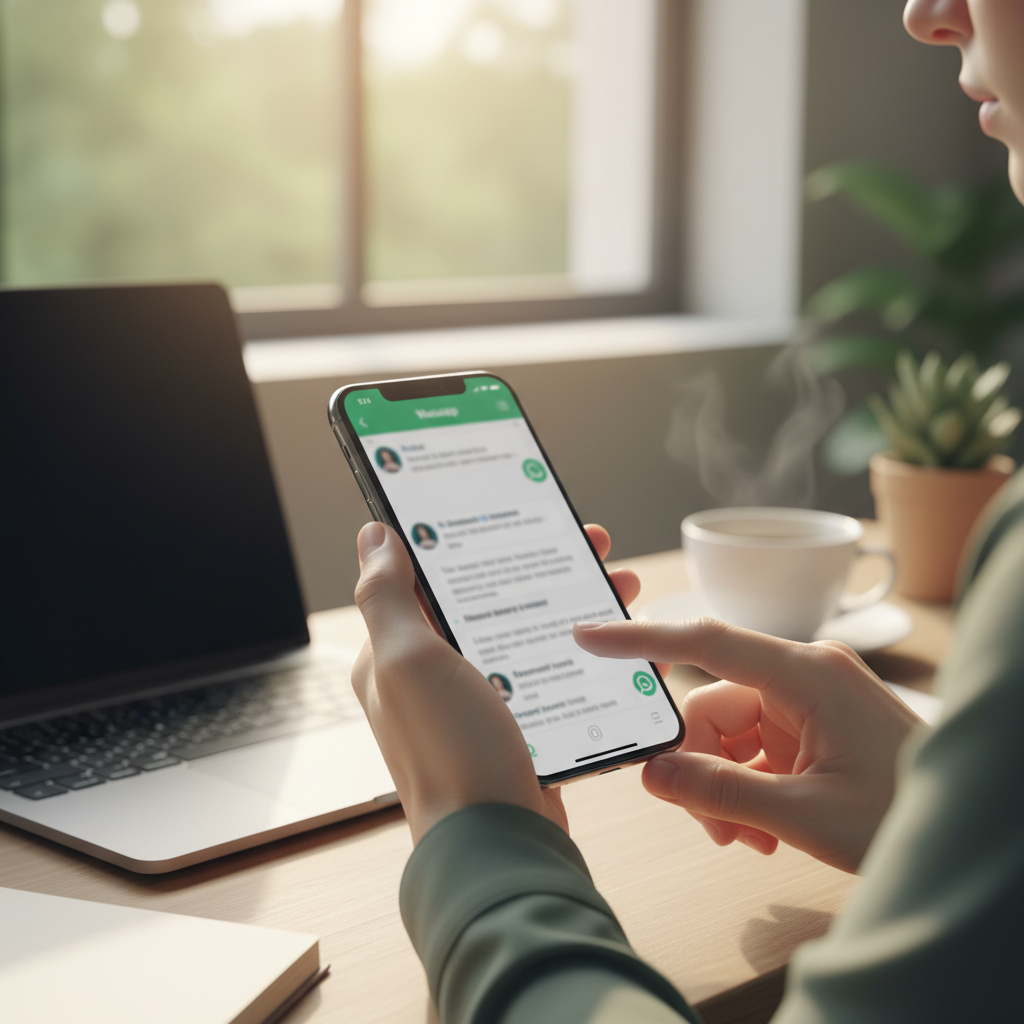
On WhatsApp Business this translates to:
- escalation policy: when AI needs to pass the chat to a human (complaints, refunds, complex cases);
- tone of voice consistent with the brand and the context;
- tracking of intent, outcomes and reasons for contact;
- audit of sample conversations to improve responses and flow;
- privacy by design: minimal data collection, consents, correct data management.
Practical example (Italy): multi-site dental clinic
A network of clinics manages requests for quotes, emergencies, appointments, and reminders. In 2026, a "mature" management approach on WhatsApp includes:
- automatic triage (urgent vs. control);
- booking with confirmation and reminder;
- clear rules: if the user reports sharp pain or bleeding, escalate immediately;
- standardized information messages (session preparation, documents, timetables).
Result: fewer calls to the answering machine, more punctual appointments, better patient experience.
AI Trends 2026 #4: Integration between WhatsApp, CRM, and enterprise systems
A chatbot on its own is limited. In 2026, conversational AI will become truly useful when connected to real systems: CRM, product catalog, ERP, ticketing, calendars, payments, logistics.
This enables high-impact scenarios:
- real-time order status without human intervention;
- automatic creation of priority tickets;
- lead scoring and assignment to sales;
- customer data recovery and personalized proposals;
- unified reports on funnels and support.
Practical example (Italy): car spare parts and workshops
A company that sells spare parts and works with workshops can use WhatsApp to:
- receive license plate or VIN in chat;
- recover compatibility from the management system;
- send quote and delivery times;
- open order and send automatic tracking;
- manage returns by collecting photos and reasons.
Here, AI doesn't "chat": it connects data and actions, reducing errors and times.
AI Trends 2026 #5: Metrics and Continuous Optimization (AI as an Infrastructure Asset)
By 2026, companies will treat AI like infrastructure: monitored, updated, and optimized. On WhatsApp Business, the most useful metrics are:
- First Response Time is Time to Resolution;
- containment rate (how many requests does the AI close without an operator);
- conversion rate from chat to sale/appointment;
- CSAT post-conversation;
- opt-out rate and perceived quality of the campaigns;
- cost per conversation and cost per acquisition.
The logic is simple: every flow must have a goal and a metric. If you don't measure it, you don't scale.
How to Prepare Your Company for AI Trends 2026 (Operational Checklist)
1) Start with high-volume processes
Select 2-3 use cases with immediate impact: order status, reservations, lead qualification, cart recovery, repetitive FAQs.
2) Design the journey on WhatsApp
Define: opt-in, primary intent, responses, escalation, close, follow-up, and campaigns.
3) Connect data and systems
Without integrations, AI remains superficial. Connect CRM, catalog, orders, and tickets wherever you need them.
4) Set governance and quality
Rules, tone of voice, controls, and continuous improvement. AI must be reliable, not just brilliant.
5) Measure and optimize
Dashboard, A/B testing of messages, periodic review of conversations, flow updates.
How SendApp can help you
SendApp offers complete solutions to manage WhatsApp Business professionally and efficiently:
- SendApp Official – Official WhatsApp Business API for bulk sending and automation
- SendApp Agent – AI chatbot with integrated ChatGPT for intelligent automatic responses
- Request a free consultation – Talk to an expert to find the ideal solution