
TL;DR: Why Voice AI + WhatsApp Business Can Become a Revenue Channel
Many companies still manage phone calls as a separate world: one system for calls, another for WhatsApp, a separate CRM, and, in between, a void of context that wastes leads and team time. With a modern approach based on conversational AI and marketing automation, calls can become a scalable, measurable, and integrated channel with WhatsApp Business.
In this guide, we'll show you how to set up "conversational" call management and connect it to WhatsApp so that each contact ends up in a single flow: immediate response, data collection, qualification, automatic follow-up, and operator escalation when needed. The goal is simple: increase conversions and service quality without proportionally increasing costs.
The key benefits in practice
- Instant response to the hottest contactsThose who call frequently are already close to making a purchase; reducing waiting times and friction means more leads saved.
- Unified Conversations: calls and WhatsApp in the same path, so the customer doesn't have to repeat everything.
- Reliable automations: Rules, workflows, and operational limits prevent inconsistent responses and ensure quality at high volumes.
- Multilingual: useful for e-commerce and tourism, especially in cities with a high international presence.
Why phone calls get lost these days (and how to put them back on the map)
In many Italian SMEs, the telephone is still managed with a 2000s-era logic: a switchboard, dispatch, a few "press 1, press 2" menus, and then the operator takes notes on a piece of paper or in a separate management system. Meanwhile, the same customer may have already messaged on WhatsApp, clicked on a campaign, or filled out a form.
When channels don't talk to each other, three things happen:
- The lead cools down: if you don't answer quickly, the caller will try a competitor.
- The customer repeats everything: frustration and perception of disorganization.
- The team wastes time: reconstruct context, search for chats, ask for confirmations, chase notes.
The solution is not to “add another tool”, but to create a unique conversational engine Where WhatsApp Business, automations, and (when available) calls work together. In this scenario, SendApp becomes the central control point for orchestrating contacts, tags, workflows, follow-ups, and handoffs.
What is a Voice AI Agent?
A Voice AI Agent It is an artificial intelligence system that answers incoming calls, understands natural language and communicates in real time to:
- understand the reason for the call;
- collect information (name, email, city, product of interest, urgency);
- qualify the request (hot/cold lead, assistance, complaint, quote);
- launch automatic actions (tags, notes, contact creation, sending WhatsApp messages, assignment to an operator).
What's the difference compared to a traditional IVR? The user... does not navigate rigid menus: speaks as if it were a person. And above all, when the "voice" part is integrated with a conversational platform, the context is not lost: what emerges from the call can immediately feed WhatsApp, CRM and workflow.
Voice and WhatsApp: The Scalable Operating Model
For many companies, WhatsApp Business is already the most effective channel for follow-ups, quotes, confirmations, and support. Calls, on the other hand, are often the first high-intent contact: callers want a response now. A scalable model combines the two worlds as follows:
1) The call intercepts the intention
The phone call helps quickly understand who the contact is and what they want. Even just 60–120 seconds can be enough to classify the request.
2) WhatsApp manages the process
Once the key information has been collected, the flow switches to WhatsApp: sending the catalog, payment link, document request, reminders, after-sales support. WhatsApp is perfect because it's asynchronous, traceable, and automatable.
3) The team only enters when needed
Operators focus on complex negotiations, objections, and sensitive cases. The rest is handled by automation and intelligent responses.
With SendApp, this approach translates into workflow that connect events and messages: automatic tags, routing, templates, sequences and assignments, maintaining a single customer story.
How a typical flow works with SendApp (from the first request to the sale)
Let's imagine an Italian company that sells air conditioning systems and receives a lot of calls in the summer. The goal is to avoid losing leads and convert the request into an inspection or quote.
Step A: Rapid data collection
During the first interaction (phone call or first contact), 4 essential pieces of information are collected:
- City/Area
- Type of dwelling (apartment, villa, office)
- Number of rooms or square meters
- Timeframes (within 7 days / within 30 days / for informational purposes only)
This data becomes fields is tag to segment.
Step B: Switch to WhatsApp with a helpful message
Immediately after, SendApp sends a contextual WhatsApp message, for example:
“"Perfect, I'll message you here on WhatsApp so I can send you two options based on square footage and area. In the meantime, can you tell me the floor plan of the house and whether you're already prepared?"”
Result: the customer has a convenient channel and the team doesn't have to call back multiple times.
Step C: Automation and Assignment
Based on the tags (e.g. “Milan”, “Urgent 7 days”, “Villa”), SendApp can:
- assign the chat to the right salesperson;
- send a follow-up sequence if the contact does not respond;
- insert the lead into an information campaign if it is "just a quote".
Step D: Conversion and Post-Sales
Once the appointment or payment is confirmed, the same WhatsApp thread remains available for:
- sending documents and photos;
- appointment reminder;
- review request;
- upsell (maintenance, filters, warranty extension).
Why Old IVRs and Siloed Systems Work Worse
Traditional switchboards and menu-based IVRs have a structural problem: they're designed to "sort," not "convert." In modern B2C (and many high-volume B2B) environments, speed, context, and cross-channel continuity are what's needed.
1) Friction = missed calls
Long menus and unclear options increase the abandonment rate. If a user is calling for a quick quote and feels stuck, they'll hang up and try elsewhere. Every missed call is a wasted marketing cost.
2) Lack of context
If the voice isn't connected to WhatsApp and the CRM, the agent can't see what happened before. The customer repeats themselves, the company seems disorganized, and the perceived quality drops.
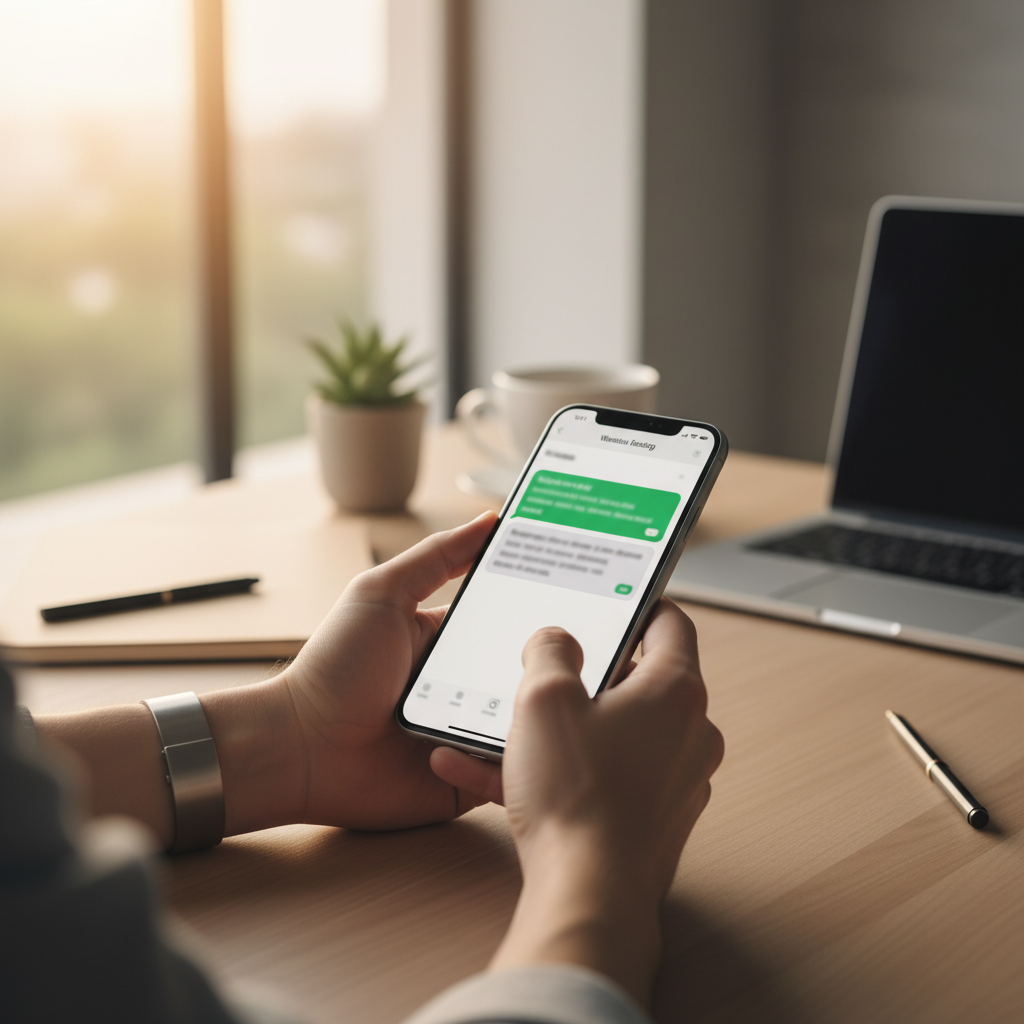
3) Operational instability and inconsistency
When experimenting with non-rule-governed solutions, responses can become inconsistent, especially under load. A scalable system requires guardrail: session limits, controlled testing, approved content, human escalation.
SendApp, with a workflow- and control-oriented approach, allows you to build automations that remain reliable even when volumes grow (campaigns, seasonality, advertising peaks).
Guardrails and Quality: How to Make Conversational AI Trustworthy
When it comes to AI, the difference between a "demo that amazes" and a "system that really sells" lies in operational management. Here are the best practices we recommend for a solid implementation with SendApp:
Clear scope of the first interaction
Define what the AI should do on first contact: qualify, collect data, propose 2-3 options, schedule an appointment, or transfer to a human operator. It's better to excel at a few things than to improvise on everything.
Immediate escalation when needed
Enter human transition rules for:
- complaints and negative tones;
- legal/administrative requests;
- complex estimates;
- VIP or existing customers.
Approved templates and knowledge
Prepare standard responses, policies, and verified product information. Conversational AI must draw on up-to-date content, not "invent" it.
Continuous measurement
Track simple KPIs:
- average first response time;
- contact-to-appointment conversion rate;
- dropout rate;
- management time per operator;
- CSAT or post-interaction feedback.
Practical Italian Examples: 5 High-ROI Use Cases
1) Beauty salons and dental practices: appointments and no-shows
Scenario: Lots of calls regarding availability and pricing, and many missed appointments.
Solution: Quick initial qualification + WhatsApp sending of:
- summary price list;
- available slots;
- automatic confirmation and reminders;
- deposit required where appropriate.
Typical result: fewer repetitive calls and fewer no-shows thanks to reminders.
2) Real estate agencies: leads from portals and urgent requests
Scenario: Contacts calling with a specific listing and want details right away.
Solution: Collect preferences (area, budget, square footage) and send the property details, video, location, and viewing booking option via WhatsApp. If the property isn't available, a flow of similar alternatives is initiated.
3) E-commerce: pre- and post-sales assistance
Scenario: Calls about deliveries, returns, size availability.
Solution: Move to WhatsApp with automations: tracking, order status, return policies, ticket opening, and updates. The operator only intervenes in non-standard cases.
4) Driving schools: registration and document management
Scenario: Many informational calls, missing documents, long waits.
Solution: Send document checklists, data collection, medical appointment and deadline reminders, and sequences for recovering undecided contacts via WhatsApp.
5) Tourism and accommodation: multilingual and quick quotes
Scenario: Requests in Italian/English/German, need immediate responses.
Solution: Quick initial response, gathering dates and guest numbers, sending the offer and confirmation link via WhatsApp. Language segmentation and pre-arrival automation (check-in, rules, upsells).
SEO and Marketing: How to Turn Contacts into a Funnel on WhatsApp
The point isn't just to "respond": it's to build a funnel. With SendApp, you can connect campaigns and conversations in a very practical way:
- From ads to WhatsApp: the user clicks and types; automation qualifies and assigns.
- From call to WhatsApp: the contact receives useful messages immediately, avoiding losing information.
- Segmentation: tags by interest, city, budget, stage (lead, quote sent, negotiation, customer).
- Nurturing: message sequences (with consent) to educate and re-engage.
In practice, WhatsApp becomes your conversational pipeline: faster than email, more personal than a form, more measurable than a one-time call.
Checklist: What to prepare before activating conversational automations
- Objective: booking, quote, qualification, assistance.
- Key questions: 3–6 questions to understand the case without weighing it down.
- Tags and fields: what the salesperson will need to close faster.
- Template messages: frequently asked questions, policies, price lists, useful links.
- Escalation rules: when to switch to an operator and to whom.
- KPI: How to measure conversions and times.
If you want to start simple, start with a single process (e.g., "request a quote") and optimize it. Then replicate the structure across other use cases.
How SendApp can help you
SendApp offers complete solutions to manage WhatsApp Business professionally and efficiently:
- SendApp Official – Official WhatsApp Business API for bulk sending and automation
- SendApp Agent – AI chatbot with integrated ChatGPT for intelligent automatic responses
- Request a free consultation – Talk to an expert to find the ideal solution