

Artificial Intelligence in Retail: The New Building Blocks of the Future
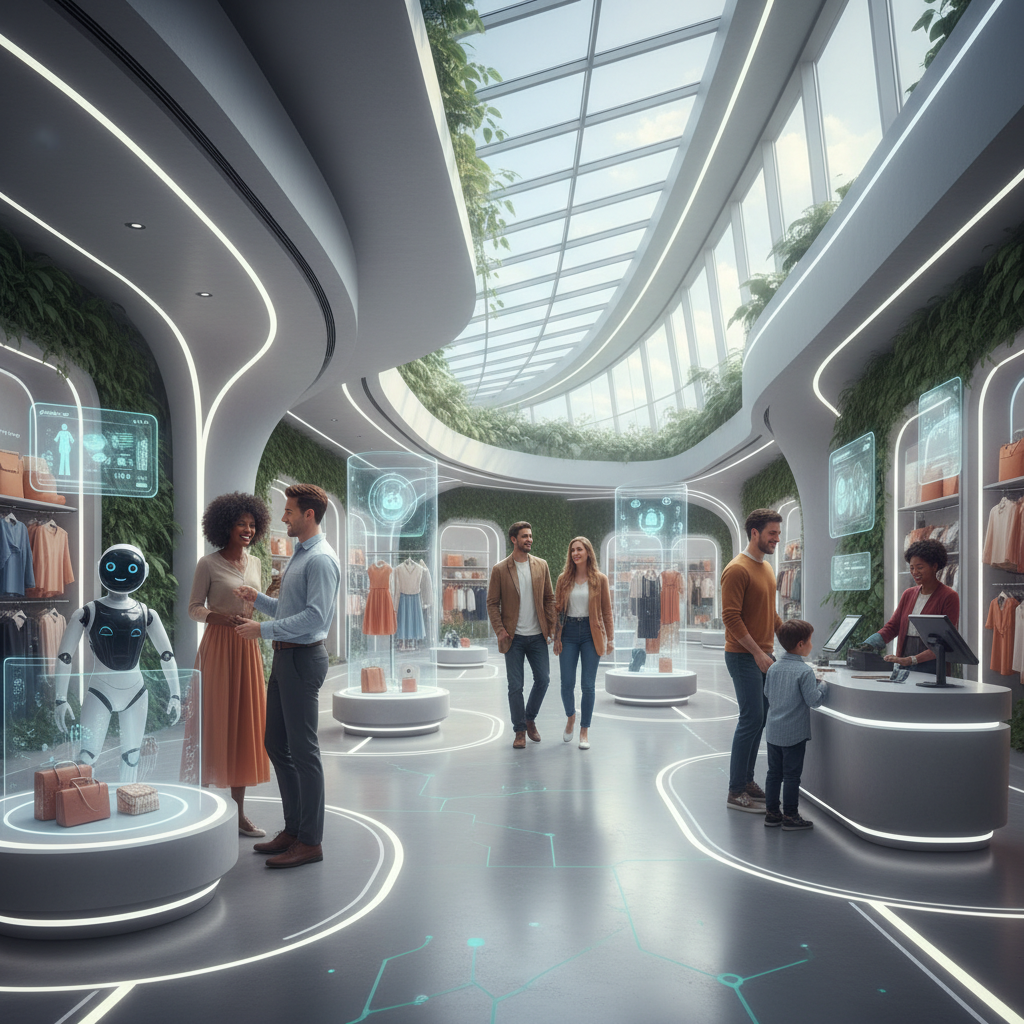
THE'artificial intelligence retail It's redesigning business models, operational processes, and customer relationships. Retail AI is no longer an experiment, but a set of strategic building blocks that are profoundly changing the industry.
The retail show, held at the NRF Big Show 2026 in New York, showcased the new "Lego bricks" on which the next trends are being built. The image of Lego bricks helps visualize the cumulative effect of activities: each piece is placed side by side and overlapped with the others to build a completely new retail edifice.
The first building block, still crucial, remains the basics: organization, processes, supply chain (sourcing, procurement, processing, distribution), logistics, transportation, finance, IT, store layout, and assortment. This is the basic Lego that must be mastered to compete.
But it's no longer enough. Excellence in basics alone is increasingly compressed by new elements arriving from above: technology, artificial intelligence retail, ecosystems, reverse commerce, new consumer sensibilities. Many leaders continue to see the basics as the only truly relevant building block, but the 2026–2028 context demonstrates the exact opposite.
Artificial Intelligence in Retail and Economic Change through 2026
The first major Lego brick to emerge at the NRF Big Show is economic change. Understanding how the economy transforms over time is vital for retail, because it influences consumption, pricing, product assortments, and investments in technology and artificial intelligence retail.
In the US case, 2026 is described as a year driven primarily by consumption, despite a very negative psychological climate. Customers continue to spend, but they do so more cautiously, expecting greater value, better service, and greater transparency.
This scenario makes the ability to read data in real time, anticipate trends, and dynamically adjust supply even more crucial. This is where AI comes into play, enabling forecasting, demand analysis, and inventory and pricing optimization, leveraging predictive models to reduce waste and increase margins.
The macroeconomic context is therefore not just a backdrop, but a building block that conditions the entire architecture of subsequent technological and strategic bricks.
Artificial Intelligence in Retail: Technology and Trends 2026–2028
The second Lego brick is technology, which is now omnipresent in every link of the value chain. Within this brick, the’artificial intelligence retail It has become a central lever for almost all organizations.
According to analyses such as those of PwC, If implemented correctly, AI can generate productivity gains of 20–30%, especially in typical retail functions: research, analysis, and operational support. Many retailers have already adopted assistants like ChatGPT, changing expectations about speed, quality of work, and availability of insights.
The critical point is strategy: without a clear vision, efficiency remains fragmented and doesn't translate into true value for customers and the supply chain. AI can't be an add-on, but a layer that cuts across governance, processes, and culture.
The third Lego brick covers trends for 2026–2028. Analysts predict a phase of strong volatility but also generative growth, where the smartest companies will transform multiple crises and uncertainty into creative advantages. The common thread: humanity as the new luxury.
Creativity, empathy, care, and connection become the distinguishing element in a hyper-automated world.’artificial intelligence retail It is thus interpreted as a technology of augmentation, not replacement: it increases human capabilities, while brands work to avoid an emotional deficit and an increase in distrust towards what appears artificial.
The first macro trend is ordinary AI: artificial intelligence is moving from being a miracle or a threat to becoming everyday infrastructure. The average attitude is one of "suspicious optimism," with regional differences between more skeptical and more open markets.
The second trend is sensory reset, a response to digital fatigue: people are seeking physical and immersive experiences, tactility, well-being, sleep, and connection with the body and nature. For retail, this means designing stores and products that stimulate the senses, highlighting craftsmanship, co-creation, rituals, and calming spaces.
The third trend is climate resilience, which has moved from rhetoric to an operational imperative with measurable ROI. Consumers expect immediate adaptation and reliable services even during extreme events. This requires robust infrastructure, redesigned supply chains, and cross-sector partnerships, as demonstrated by nature-based urban infrastructure projects described by UNEP.
The fourth trend concerns community in a time of crisis: in chaotic times, people seek guidance, simplification, and belonging. Brands must become curators and guardians, offering third spaces, social rituals, shared well-being, and concrete microsteps to make life more manageable.
The fifth trend is that of fragmented identities and niches: the standard consumer is disappearing, and demographic segmentation alone is no longer enough. What matters are interests, passions, life stages, and micro-communities. Finally, the sixth trend is the restoration of trust in an era of skepticism toward institutions, media, and businesses: transparency, evidence, accountability, data protection, and co-creation become conditions for growth.
Ecosystems, reverse commerce and new consumers
The fourth Lego brick is the creation of ecosystems. Retailers are transforming into platforms that capitalize on assets such as customer base, traffic, data, and the ability to transform insights into value throughout the lifecycle.
The goal is to protect the core that generates trust and use new services to diversify without losing identity, entering areas such as marketplaces, logistics, media, content, technology, and finance, often through M&A and partnerships. In this scenario, the’artificial intelligence retail it must become central to the model, not an accessory.
One example is CVS, an American pharmaceutical retailer that has built a healthcare ecosystem around the pharmacy as a frequent and reliable point of contact, extending to insurance, services, and healthcare providers. Another case is Magalu, a Brazilian retailer that combines omnichannel, acquisitions, and new platforms, with "Lu" as a digital asset and commerce conversations on WhatsApp to integrate discovery, support, and payment.
The analyses shared at the NRF reiterate that vision, data, governance, and change management are crucial to making an AI-first ecosystem work. Without these foundations, the technology remains fragmented.
The fifth Lego brick is Reverse Commerce. In a dedicated panel, investors and operators in the circular economy and reverse logistics demonstrated how returns have evolved from a purely operational issue to a strategic focus for efficiency, resilience, and sustainability.
Close Loop Partners outlined the investment framework, while another investor highlighted the role of AI and advanced analytics in three key areas: returns prediction, automated decisions about the fate of returned goods (restocking, refurbishment, recycling, refund without return), and fraud detection, including through computer vision.
The focus is also shifting upstream: identifying and addressing the causes of returns, from design to online descriptions to order fulfillment, leveraging resale and recommerce to recover margins. Available capital today is more selective than in 2021–2022: entrepreneurs must demonstrate impact on real needs, clear metrics, and differentiation based on proprietary data and domain expertise.
Loyalty comes from frictionless returns, balanced with anti-fraud controls, omnichannel options, and transparent communication. Looking ahead to 2030, the key differentiators will be infrastructure, customer centricity, and the ability to protect margins.
As the sixth Lego bricks, consumer outlooks 2026 emerge: complementary points of view on consumption and changes in retail, where once again data and artificial intelligence retail become key to interpreting weak signals and evolving preferences.
Generative Retail Artificial Intelligence: Interpretation and Use Cases
Generative AI can create content and support end-to-end business management. The focus is shifting from simple chat functions to agentic capabilities and full process automation, with a direct impact on“artificial intelligence retail applied to marketing, operations and customer care.
There was a lot of talk at the NRF about what Not It's AI: it's not an autonomous decision-maker that replaces leadership, it doesn't replace governance, it's not a "set-it-and-forget" system. It requires continuous monitoring, control, optimization over time, and above all, human oversight.
For retail, AI is particularly relevant because the context is multi-stakeholder, based on trust and credibility. It's necessary to balance the needs of end customers, members, sponsors, and governance, while maintaining a neutral and consistent voice across the industry.
There are five main "value pools" of AI: the first is the engagement of end and intermediate customers, with personalized and timely interactions at scale and reduced service costs. The second is the insights and intelligence area, which leverages advanced analytics, rapid synthesis of different sources, trend detection, and benchmarking, as demonstrated by the experiments documented in Wikipedia.
Another area (the fourth value pool in NRF analysis) concerns events and communities, where AI facilitates connections between participants with shared interests and enhances the experience with intelligent Q&As and personalized journeys. The fifth is internal operational efficiency, automating routine tasks and creating leverage in lean organizations.
Some practical examples, often already achievable with popular tools like Microsoft Copilot, include: co-pilots for executive briefings, 24/7 support for internal questions based on company knowledge, creation of content consistent with the brand voice, event customization, and operational support (invoices, CRM updates) with significant reductions in work times.
The final recommendation is to treat AI adoption as a strategic choice, not an IT project. It's necessary to define measurable objectives, establish robust governance, reduce risks and errors, invest in change management and training to build trust, and rethink processes with an AI-first approach, redesigning them end-to-end rather than simply adding technology to existing workflows.
Artificial Intelligence in Retail: Impact on Marketing and Business
THE'artificial intelligence retail It has a direct impact on digital marketing, customer experience, and business models. From a marketing perspective, AI enables the shift from mass campaigns to hyper-relevant communications based on behavioral data, context, and individual preferences.
In a world where brand discovery is increasingly driven by generative engines and recommendation systems, it's crucial to design clear, verifiable, and reliable content that can be "discovered" by AI responses. This requires data governance, consistent messaging, and a content strategy geared toward people's real queries.
On the business side, AI supports decisions on assortments, pricing, promotions, inventory management, logistics, and reverse commerce. By automating complex analyses, it frees up time for high-value activities, while the human component focuses on creativity, relationships, negotiation, and community nurturing.
The customer experience is transformed throughout the entire journey: from search to conversation, from in-store visits to after-sales service. Advanced chatbots and virtual agents handle high volumes of requests, while human agents intervene at critical or high-relationship moments, embodying the "human premium" that consumers don't want to lose.
For retail companies, the challenge is no longer whether to adopt AI, but how to do so in a way that strengthens the brand, increases trust, and builds lasting relationships, avoiding impersonal or perceived as purely automated experiences.
How SendApp Can Help Retail with Artificial Intelligence
In the transition towards an AI-first model, direct conversation with the customer becomes a strategic asset. This is where SendApp comes into play, enabling projects artificial intelligence retail Leveraging WhatsApp Business as a preferred channel for engagement, support, and sales.
With SendApp Official, retailers can integrate the Official WhatsApp APIs within their CRM, e-commerce, and data platforms, building automated and personalized communication flows. AI can manage Q&As, suggest products, send targeted promotions, and gather real-time insights.
SendApp Agent It allows you to coordinate teams of human agents and AI chatbots on a single interface, balancing automation and "human premium." Retailers can assign conversations, monitor performance, ensure rapid response times, and maintain consistency in tone and content.
For those who want to push advanced automation, SendApp Cloud It offers a scalable infrastructure for orchestrating complex conversational journeys: reminders, notifications, post-purchase follow-up, returns management, feedback collection, and multi-channel re-engagement campaigns.
In this way, the’artificial intelligence retail It no longer remains an abstract concept, but becomes a concrete lever for increasing sales, loyalty, and service quality, keeping the person at the center of every interaction.
For retailers who want to seize the AI opportunity and transform WhatsApp into a strategic channel, the next step is to engage in dedicated consulting and field test automation workflows. Discover all the solutions on SendApp and start designing your conversational retail of tomorrow today.