

WhatsApp Interoperability: What It Really Means for Cross-App Chats
WhatsApp interoperable It's the new frontier of instant messaging in Europe. With interoperable WhatsApp, users can, at least in theory, message others using other apps like Apple Messages or Telegram without switching platforms. But how does this interoperability actually work today, and what are the concrete limitations?
The European Union, with the Digital Markets Act, which came into full force in 2023, has mandated that major messaging services become interoperable. In practice, the goal is to allow WhatsApp users to send messages to users of other chat apps and vice versa, following a model similar to email, where it's common to communicate seamlessly between Gmail and Outlook.
In recent days, WhatsApp has begun integrating what it calls "third-party chats," meaning conversations with users who use other messaging service providers. WhatsApp's interoperable system was designed to be intuitive, but currently testing is limited to a single, little-known third-party app: Birdychat. The features are still limited, but they represent a breakthrough in digital communication.
WhatsApp Interoperability: How Third-Party Chats Work
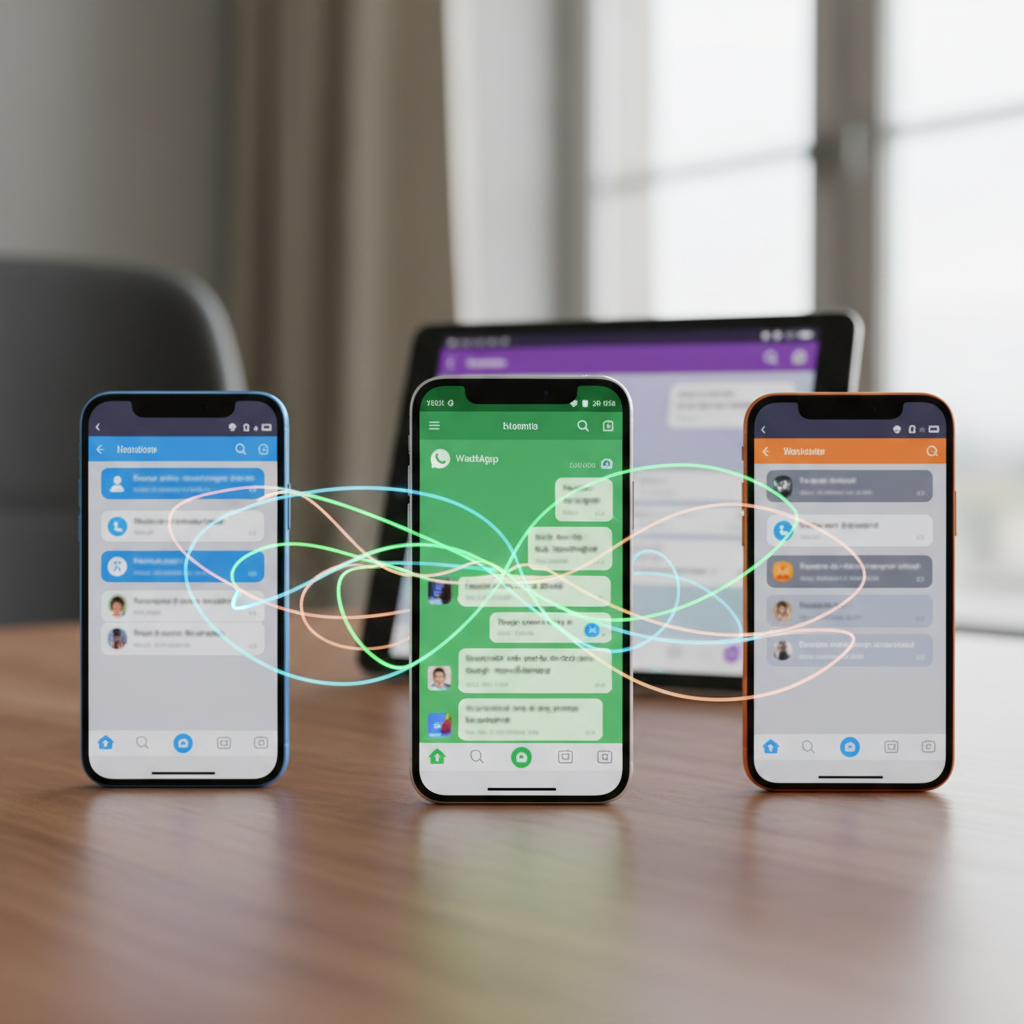
To make WhatsApp interoperable, Meta has introduced a "Third Party Chat" section within the app. This feature allows you to send and receive messages, photos, videos, voice messages, and documents with users who don't use WhatsApp directly, but another supported platform. Users can choose whether to view these chats alongside traditional WhatsApp conversations or keep them in a separate, dedicated section.
Technically, third-party chats are managed separately from traditional conversations. Users can enable or disable this feature at any time, maintaining control over which external apps can communicate with their account. This is a crucial step for privacy and security, as openness to other platforms potentially increases the attack surface.
At the moment, however, the real limit of the system WhatsApp interoperable The availability of integrations is paramount. The only supported third-party app is Birdychat, a service virtually unknown to the general public. Much more popular apps, such as Apple Messages or Telegram, should arrive over time, but there's no official date for these integrations yet. The current situation is therefore more of a testing phase than a fully realized revolution.
Current limitations on interoperability between WhatsApp and other apps
The mode WhatsApp interoperable WhatsApp currently has some significant limitations from a user perspective. First, third-party chats aren't available on tablets, the web, or computers: they can only be used on smartphones, both Android and iOS. This reduces the interoperability impact for those who frequently work from desktop or use the web version of WhatsApp to manage conversations.
Another important aspect concerns data shared in chats with users outside of WhatsApp. In these conversations, the only information visible to the other party is the phone number; name and profile picture are not shared. This reduces the risk of personal data exposure, but makes it less easy to identify the sender, especially in business or professional contexts.
Managing third-party chats can also fragment the user experience. Whether or not to separate these conversations from traditional chats is a choice each user must make, but as long as interoperability is limited to a few services like Birdychat, its practical utility remains limited. True transformation will only come when major messaging apps fully accept and implement the standards required by the EU.
How to enable WhatsApp interoperability and chats with other apps
To activate the function WhatsApp interoperable, you need to go to the app settings. The current path involves entering Settings > Account > Third-Party Chat and select the "Activate" option, then follow the on-screen instructions. An introductory screen briefly explains the feature, and by pressing "Next," the user can choose which third-party applications to make compatible.
Today, the list of available apps has been reduced to just one: Birdychat. Once selected, the user can decide whether to display interoperable conversations within the main chat list, alongside the others, or in a separate section called "Third-party chats." This setting can be changed at any time, just as it's always possible to disable the feature entirely from the settings.
The logic of the system WhatsApp interoperable It's designed to give users maximum control. When more popular apps like Apple Messages or Telegram become available in the future, each person or business will be able to decide which platforms they actually want to communicate with, creating their own open yet manageable messaging ecosystem. Ultimately, this could bring instant messaging closer to the open and interoperable model we know today with email.
How to message users on other messaging apps
Once the feature is activated WhatsApp interoperable Once you've selected the third-party apps you want to support, sending a new message is fairly simple. From the WhatsApp home screen, tap the chat icon in the bottom right—the one with a green background and a "+" symbol in the center. On the next screen, select "New Chat" and then the specific option "New Third-Party Chat.".
At this point, the user must choose the third-party messaging app they wish to communicate with, such as Birdychat. To find the recipient, a phone number alone isn't enough: WhatsApp may require an email address, username, or number the target user has registered with the third-party app. Each supported platform may therefore require a different identifier, depending on how it manages accounts.
It is important to emphasize that, because the function WhatsApp interoperable For this to work, the other user must also have enabled interoperability mode on their messaging app. If this hasn't happened, WhatsApp will display an error message stating "this user cannot be found." Therefore, at this initial stage, actual use of third-party chats requires some awareness and configuration on both sides.
WhatsApp Interoperability: Impact on Marketing and Business
Evolution towards an ecosystem WhatsApp interoperable It has potentially significant implications for digital marketing and corporate communications. If interoperability is fully implemented across major apps, companies will be able to reach customers on their preferred channel, without forcing them to install a specific platform. This could reduce friction in the acquisition funnel and significantly improve the customer experience.
From a customer care perspective, an interoperable messaging model brings chat channels closer to the idea of a "one-stop shop" for the brand. Customers could message from Telegram, Apple Messages, or other compatible apps, while the company would manage all conversations from a single interface based on WhatsApp or an automation platform. This opens up new opportunities for integration with CRM, marketing automation, and omnichannel support workflows.
In a context of marketing automation, The prospect of an interoperable WhatsApp enables the design of more seamless and personalized journeys, where the channel is no longer a constraint but a dynamic variable. Companies will be able to focus investments on content, segmentation, and artificial intelligence for conversation management, knowing that the message will reach the customer even if they're using another messaging app.
To learn more about the European regulatory framework on the Digital Markets Act and the topic of digital competition, it is useful to consult the official resources of the European Commission. For a general overview of instant messaging services, there is also a dedicated entry on Wikipedia, useful for contextualizing the ongoing change.
How SendApp Can Help with Interoperable WhatsApp
In a scenario where WhatsApp interoperable As WhatsApp becomes an industry standard, automation platforms like SendApp assume a strategic role for companies. The ability to centralize workflows, automations, and response teams will be crucial to transforming interoperability from a technical constraint to a true competitive advantage. SendApp is designed specifically to help businesses structure, scale, and measure communications on WhatsApp Business.
For companies that want to use WhatsApp as an official channel, SendApp Official offers access to Official WhatsApp Business APIs, essential for high volumes, integration with CRM and management systems, and for orchestrating advanced automation. In a future interoperable environment, official APIs will be the primary point of connection for managing conversations from different ecosystems in a compliant and scalable manner.
For the operational management of conversations, especially in sales and support teams, SendApp Agent It allows you to distribute chats among multiple operators, track performance, and ensure rapid response times. In a world WhatsApp interoperable, the volume of incoming messages could increase significantly: having a multi-agent system therefore becomes essential to maintain high quality of service.
Finally, to orchestrate automations, campaigns and integrations in the cloud, SendApp Cloud It offers a centralized environment for managing templates, automated workflows, segmentation, and reporting. This type of infrastructure is the foundation for building omnichannel journeys where interoperable WhatsApp integrates with other digital marketing tools, CRMs, and conversational AI systems.
Companies looking to prepare for the evolving messaging landscape can start building their WhatsApp Business presence with SendApp now, experimenting with automation, segmentation, and advanced customer care. You can request a personalized consultation and evaluate a free trial of SendApp services directly from the official website. sendapp.live, to be ready for the full maturity of the ecosystem WhatsApp interoperable.