

Email Automation and AI: Toward a Self-Managing Inbox
Email automation is AI They're revolutionizing email management for professionals and businesses. Today, email automation allows you to filter, classify, and even reply to messages, giving people control over the most sensitive decisions.
THE'artificial intelligence Applied to email, it has gone from a simple anti-spam filter to an advanced triage system, capable of analyzing content, recognizing priority, and suggesting actions. Next-generation linguistic models, platforms marketing automation and specialized clients are converging toward a nearly self-managing inbox, dramatically reducing the time spent on digital microtasks.
Email automation: from manual inbox to intelligent inbox
THE'automated inbox It has become one of the most discussed topics among digital work professionals. This isn't a sudden change, but the result of a technological convergence that has made a long-awaited promise a reality: allowing the inbox to take care of a significant portion of repetitive work.
Thanks to the’email automation, systems are able to automatically categorize messages, distinguishing between urgent communications, newsletters, notifications, and spam. AI also plays a role in understanding natural language, recognizing intent and priorities, and proposing contextual responses that can be validated or modified by the user.
According to the evolution of the linguistic models, Modern email clients are starting to integrate intelligent suggestion features, long thread summarization, and draft generation. This hybrid approach, where AI does the preparatory work and humans retain final control, is the basis of new email solutions. email automation.
How AI and Language Models Power Email Automation
The adoption of generative AI models It allows you to transform email from a simple static channel to a dynamic work interface. Large Language Models (LLMs) can read message content, extract key data, propose concise responses, and automatically organize relevant information.
These systems exploit techniques of machine learning supervised and unsupervised to improve over time by learning from user actions: emails archived, replies sent, messages marked as important.’email automation it therefore becomes progressively more precise and personalized.
In parallel, the platforms of automation They integrate advanced rules: activating tasks in CRMs, updating support tickets, and sending real-time alerts to specific teams. The inbox transforms from a simple communication inbox into a true "operational hub" connected to other company tools, anticipating the concept of the mobile intelligent workplace described in the most recent analyses of connected work.
Email automation and AI in everyday productivity
The main goal of email automation and AI is reducing time spent on low-value tasks, such as reading redundant messages, searching for information, and manually managing labels. In complex business environments, this means saving hours of work per week for every professional.
Modern solutions focus on a model where the system automatically performs triage: it identifies emails requiring an immediate response, flags business opportunities, aggregates system notifications into periodic digests, and archives irrelevant information. The user intervenes primarily for strategic decisions and sensitive communications.
This approach is consistent with the vision of a intelligent workplace accessible directly from your smartphone: secure applications, integrated with corporate cybersecurity policies, which offer business continuity and connected work. In this scenario, the’email automation It becomes an essential part of the digital workplace, especially for managerial roles and sales figures.
Security, Human Control, and Compliance in Email Automation
The mass introduction of AI is email automation inevitably raises issues of security, privacy, and human control. Companies must ensure that the systems that analyze emails are compliant. GDPR and industry regulations, especially when handling sensitive data or critical information.
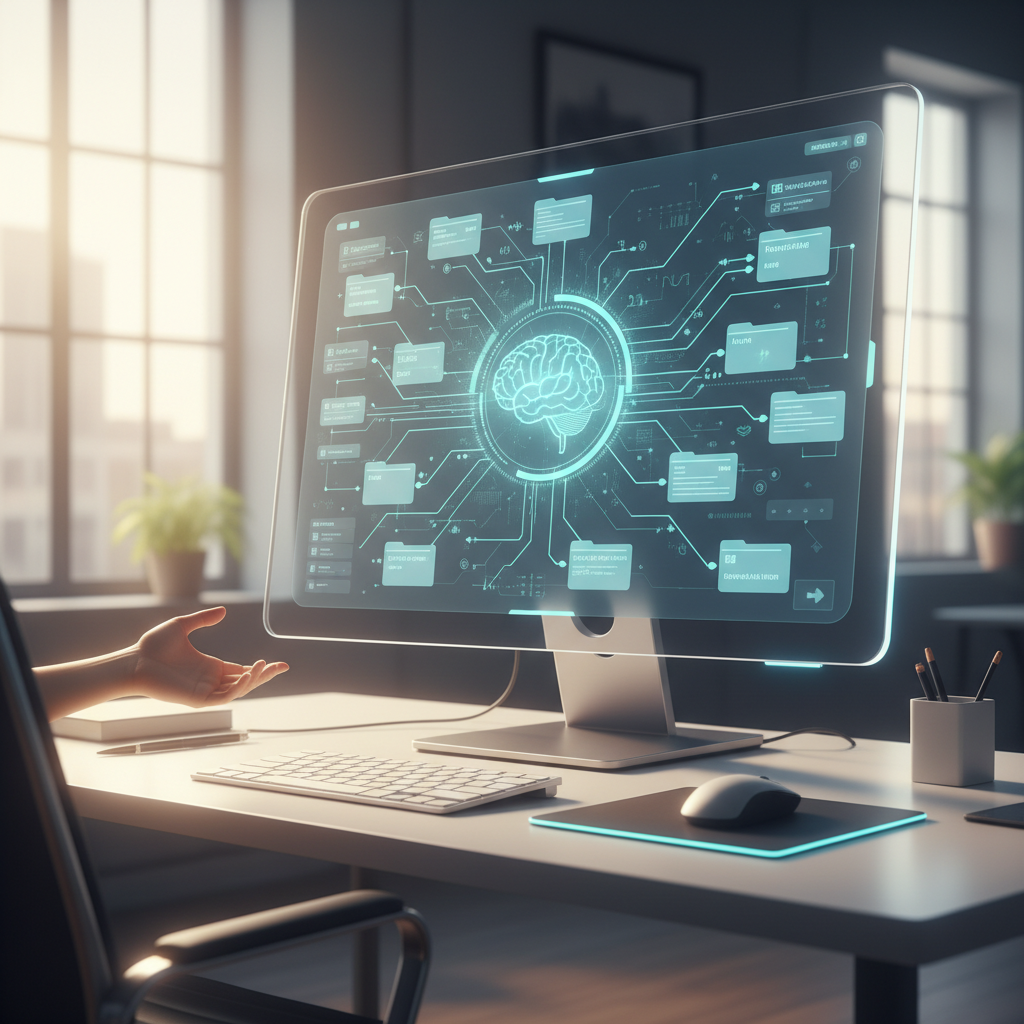
A key principle is the "human in the loop": AI suggests, but humans decide. This is particularly true for legal, contractual, or high-impact communications, where the risk of automated error is unacceptable. AI systems email automation They must therefore offer logs, audit trails and the ability to review automatic actions.
From a cybersecurity perspective, the combination of AI and automation also helps detect advanced phishing, anomalous behavior, and social engineering attempts. Behavioral analysis of email flows allows you to identify suspicious patterns and alert users before they take risky actions, complementing traditional spam protection with an additional "intelligent" layer.
Email Automation: Impact on Marketing and Business
THE'email automation It has a direct impact on digital marketing strategies and customer experience. Automating transactional email flows, sales follow-ups, and nurturing sequences allows you to maintain a constant relationship with customers without overloading your sales and customer service teams.
From a marketing point of view, the combination between AI Automation allows you to segment contacts based on behavior, interaction frequency, and response content. This leads to more personalized campaigns, with higher open and conversion rates than generic newsletters.
For business, the’email automation It means reducing response times, increasing communication consistency, and integrating email with CRM, ticketing systems, and analytics platforms. Companies can thus track the entire customer lifecycle, from first contact to loyalty, accurately measuring the impact of each message on revenue.
Concrete examples include: automatic appointment and deadline reminders, guided post-purchase onboarding, reactivation of inactive users, and automated management of recurring inquiries. All of this frees up teams' time for high-value activities, such as developing new offers and nurturing strategic relationships.
How SendApp Can Help with Email Automation
Although it was born as a platform focused on WhatsApp Business and instant messaging, SendApp is designed to integrate naturally with your messaging strategies. email automation and omnichannel marketing. The goal is to create a seamless flow between email, chat, and notifications, improving the speed and quality of communication with customers and prospects.
With SendApp Official Businesses can use the official WhatsApp API to complement emails with targeted instant messages, such as order confirmations, critical alerts, or high-priority reminders. This combination reduces the risk of important information getting lost in overloaded inboxes, enhancing the effectiveness of the service.’email automation.
SendApp Agent It supports teams in centrally managing conversations, allowing them to coordinate messages from different channels in a single interface. This way, automation rules applied to email can also be extended to WhatsApp, with automatic routing to the correct departments, tags, internal notes, and response time monitoring.
For more advanced scenarios, SendApp Cloud offers scalable cloud automation capabilities, ideal for integrating workflows email automation With multi-channel campaigns, chatbots, and event-based triggers, companies can build complete journeys, where the inbox is no longer a bottleneck but an intelligent hub in a broader communications ecosystem.
Finally, SendApp solutions align with the security and business continuity principles required by the modern workplace: centralized access management, activity logging, scalability, and integration with corporate cybersecurity policies. For companies looking to maximize AI and automation in customer relationships, the next step is to evaluate a strategy that combines email automation and instant messaging.
To find out how to integrate SendApp into your communication infrastructure and enhance your workflows email automation, visit the official website SendApp and request a personalized consultation. You can start with a trial of WhatsApp Business services and design your new automation ecosystem with an expert.











Very interesting article. The idea of automating email management with AI seems really useful to me, especially for those with a high volume of messages to manage. I hope the privacy and security aspects are also explored in greater depth.