
Why WhatsApp Marketing Is Surpassing Email and Social Media
If your company is struggling to get responses from traditional marketing campaigns today, you're not alone. Email open rates are declining, organic social media posts are increasingly less visible, and landing pages that convert only a small portion of traffic are common problems. The key isn't to "do more marketing," but to choose channels that foster real conversation.
WhatsApp Business (and especially professional use via official APIs) allows you to move from a "broadcast" to a "conversational" model: the user doesn't just receive a message, but can respond, ask for clarification, get guidance, and make a purchase with less friction. When you add marketing automation and conversational AI, you can handle high volumes while maintaining quality and rapid response times.
In this guide, we'll look at how to set up a WhatsApp Business Marketing strategy geared toward lead generation, qualification, and conversion, with practical Italian examples and a focus on automation and AI chatbots with SendApp.
WhatsApp Business Marketing vs. Traditional Methods
The classic path: announcement → form/email → nurturing
Traditionally, many campaigns start with ads (Google or social) that lead to:
- a contact form to collect email and telephone numbers;
- a product landing page with an invitation to immediate purchase;
- a catalog or a “quote” page.
Once the email is collected, a nurturing flow is initiated: a sequence of content that should lead the user to purchase. The problem is that the relationship often remains one-way, with long lead times and little interaction.
Limitations of email marketing and cold landings“
Two recurring critical issues:
- Low attention span: The user is inundated with emails and notifications; even if they open them, they often don't respond.
- Decision too quicklyTaking a “cold” user directly to a product page can work for simple offers, but for services, high-value products, or complex decisions (e.g. financing, courses, systems, furniture), dialogue is needed.
In many industries, the ability to ask questions and receive immediate answers speeds conversions faster than any landing page.
The conversational model: ad → WhatsApp → sale
With WhatsApp the path changes:
- The user sees an ad or call to action.
- Click and start a WhatsApp chat.
- An automated flow (or an operator) collects information, qualifies the lead, and suggests the next step: quote, appointment, payment, or in-store visit.
This model has a huge advantage: it reduces the time between interest and response. And with automation, you can do it at scale without losing control.
When WhatsApp is the right channel (and for whom)
WhatsApp is particularly effective for businesses that:
- they receive many repetitive requests (availability, prices, times, methods);
- they have a “ask before you buy” sales cycle;
- manage reservations or appointments;
- they sell with consultancy (B2C or B2B) and want to reduce response times;
- want to increase the conversion rate from advertising campaigns.
In Italy, it's a natural channel: users are accustomed to messaging businesses, professionals, and brands on WhatsApp. Your goal is to transform this habit into a measurable and automated process.
How to Get WhatsApp Contacts in a Consistent and Measurable Way
Rule number one: to write professionally on WhatsApp, you need to manage consent and context. In practice, you need to ensure that the user initiates the conversation or provides a clear opt-in (depending on the applicable methods and policies).
1) Click-to-WhatsApp from campaigns
The most direct method: ads that lead to chat. It works well because it eliminates intermediate steps. An Italian example: a gym in Milan launches a "7-day trial" campaign and directs the user to WhatsApp, where an automatic flow asks about their goals (weight loss, strength, posture), preferred times, and location. Based on the responses, it suggests a trial and makes a reservation.
2) QR code in store and on printed materials
Perfect for retail, restaurants, showrooms, and trade shows. For example, a furniture company places a QR code in its showroom with the CTA "Get a quote in 2 minutes." The user scans, a chat begins, and the AI collects measurements, style, budget, and timeframe. The operator receives a pre-qualified lead.
3) WhatsApp widget on the site
Many site visits don't convert because the user has a question. A WhatsApp button (with a pre-populated message) increases inquiries and reduces abandonment. For example, a natural cosmetics e-commerce site uses a "Personalized Recommendation" widget: the user enters their skin type and goal and receives a recommended routine.
4) Lists and CRM: how to connect data
The difference between "receiving chats" and "doing marketing" is data management: tags, custom fields, lead source, products of interest, and funnel status. With SendApp, you can structure contacts and conversations to segment and automate follow-ups in an organized manner, instead of losing information in scattered chats.
WhatsApp Automations: What to Really Automate
Automation doesn't mean "cold answers," but repeatable processes that free up team time and improve the customer experience. The most effective areas:
Intelligent reception and routing
As soon as the user writes, you can:
- send a contextual welcome message (based on the campaign or referral page);
- propose a quick menu (quote, assistance, tracking, appointment);
- route to the right department (sales, support, administration).
Example: Dental office in Rome: "Want to book an appointment, ask for prices, or speak to the receptionist?" Reduce calls and downtime.
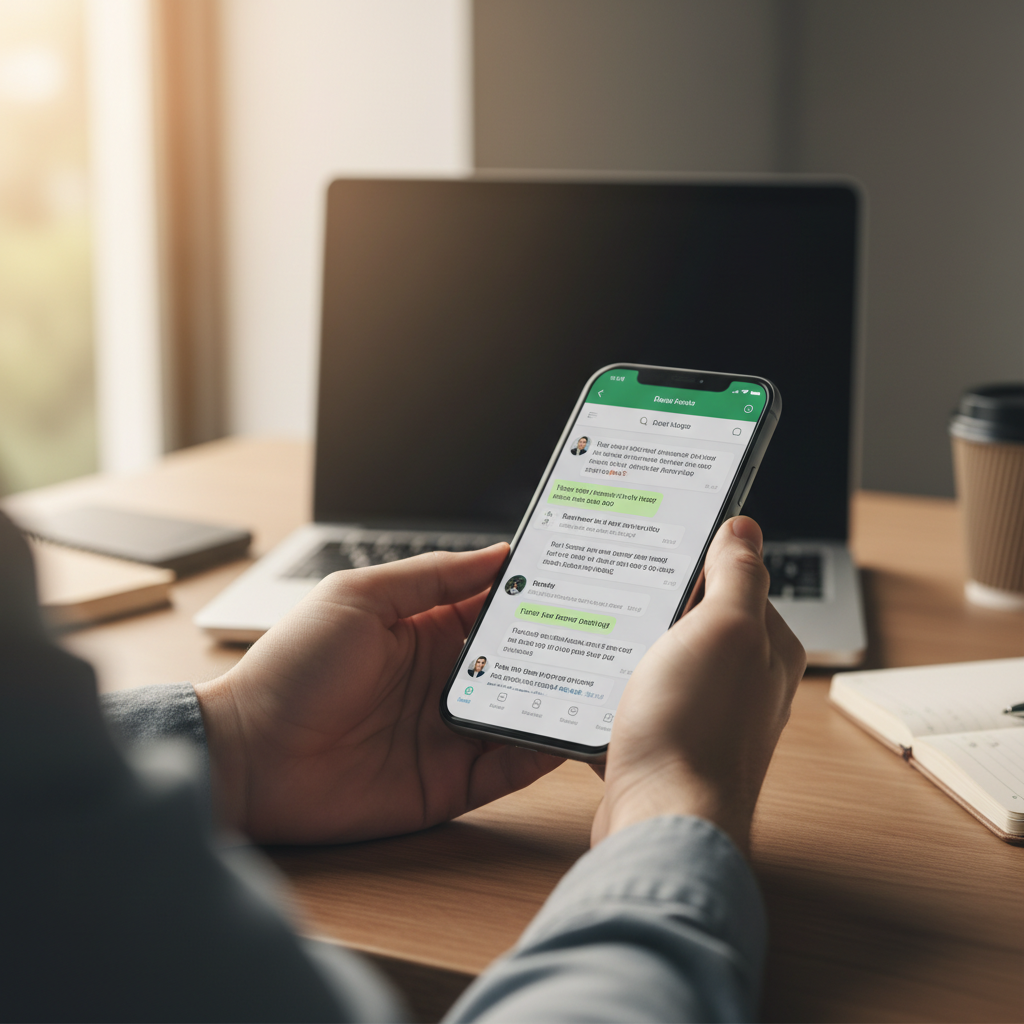
Lead qualification with guided questions
A flow of 4-6 questions can make a difference. Example for a window and door company:
- City and ZIP Code
- Type (windows, doors, mosquito nets)
- Number of pieces
- Timeframes (within 30 days, 60, 90+)
- Preference (online quote or on-site inspection)
Result: The salesperson receives complete requests and can respond with a relevant offer.
Automatic follow-ups that increase conversions
Many leads don't buy because they get lost. With automations, you can send reminders and helpful content at the right time. Example: travel agency:
- After 2 hours: “Do you want me to suggest 3 options based on your budget?”
- After 24 hours: “Do you prefer the sea, the city, or a tour?”
- After 3 days: “Last places available for the date you indicated: do you want to secure it with a deposit?”
Follow-up becomes a service, not a pressure.
Recovering unconfirmed carts and quotes
If you sell online or offer quotes, WhatsApp is ideal for winning over undecided customers. Example: Electronics store: "Still unsure about the model? I can compare two options in 30 seconds." Often, a simple reply is enough to close the deal.
After-sales: assistance, upsells and reviews
After purchase you can automate:
- instructions for use and FAQ;
- review request (Google, Trustpilot, etc.);
- consistent upsells (accessories, extensions, maintenance).
Example: Beauty salon: after a treatment, it sends post-session advice and offers a package with a discount within 7 days.
Conversational AI on WhatsApp: How to Use It Without Losing Control
Conversational AI isn't meant to "replace" your team, but to manage repetitive requests and maintain immediate response times. The key is to design well:
- Clear intentions: reservations, prices, availability, order status, product info.
- Human escalation: when the user asks for it or when the AI detects uncertainty.
- Knowledge base: updated price lists, policies, times, conditions.
Practical example: restaurant with frequent reservations and requests
Typical Italian scenario: "Do you have room tonight?", "Are you gluten-free?", "Where should I park?" An AI agent on WhatsApp can:
- ask for date, time, number of people;
- check availability (or collect request to call back);
- manage notes (allergies, high chair, birthday);
- send confirmation and reminder.
Staff save time and reduce phone calls, improving the experience.
Practical example: B2B company looking for qualified leads
An IT service provider receives leads from campaigns. AI on WhatsApp asks targeted questions (company size, need, urgency, approximate budget) and directly suggests an appointment. The sales representative intervenes only when the lead is "ready," increasing the ratio between time spent and real opportunities.
Strategy: How to Build an End-to-End WhatsApp Funnel
To get results, think of WhatsApp as a complete funnel:
1) Acquisition
Click-to-WhatsApp ads, QR codes, websites, social media, and point-of-sale ads.
2) Activation
Welcome message + shortcut + clear promise (e.g. “5-minute quote”).
3) Qualification
Guided questions, data collection, tags and segments.
4) Conversion
Personalized quote, booking, payment, document sending, order confirmation.
5) Retention
Support, helpful content, reordering, renewals, and targeted promotions.
Italian best practices: tone, timing, and content
- Write as you would speak in the shop: clear, courteous, and concrete. WhatsApp is informal yet professional.
- Reduce long messages: 2-3 short messages are better than a “wall of text”.
- Use shortcuts: “1) Estimate 2) Availability 3) Assistance”.
- Promise and keep: If you say “we’ll respond in 5 minutes,” the automation must cover after-hours.
- SegmentDon't send the same message to everyone; differentiate by city, interest, and stage of the funnel.
What to Measure: Useful KPIs for WhatsApp Marketing
To understand if the strategy is working, monitor:
- Chat Start Rate from campaigns (click-to-chat);
- Average first response time (automation reduces it dramatically);
- % qualified leads (how many complete the flow);
- Conversion rate chat → appointment → sale;
- Reasons for contact (to improve FAQs and flow);
- Customer satisfaction after-care.
Common mistakes to avoid
- Using WhatsApp as a nondescript newsletter: without segmentation you risk unsubscriptions and poor effectiveness.
- Don't connect chats to the business process: If the team doesn't have statuses and notes, leads get lost.
- Automate without “exit” to a human: the user must be able to talk to someone when needed.
- Messages that are too promotionalWhatsApp works when it's useful and conversational.
How SendApp can help you
SendApp offers complete solutions to manage WhatsApp Business professionally and efficiently:
- SendApp Official – Official WhatsApp Business API for bulk sending and automation
- SendApp Agent – AI chatbot with integrated ChatGPT for intelligent automatic responses
- Request a free consultation – Talk to an expert to find the ideal solution